
How to Choose the Right Linen Towel (And Why It’s Not as Simple as It Looks)
Most people choose towels the same way they choose cushions: by touch, thickness, and how soft they feel in the store. Linen towels don’t reward that approach.
If you’ve ever picked up a linen towel and thought “this feels different”, you were right. Linen behaves differently from cotton, and the things that matter most aren’t always the ones you can judge in a few seconds.
In simple terms, the right linen towel comes down to size, weave, and weave pattern. Those three choices determine how well the towel absorbs water, how fast it dries, how it feels on your skin, and how it performs after years of use — not just on day one.
A Note on Where This Advice Comes From
We’ve been working with linen since 1928 — long enough to say we’ve seen most of what linen can do, and quite a few things it shouldn’t do. As one of the oldest linen manufacturer in the Baltics, we work with linen from the very beginning: the yarn dyeing, the weaving, the finishing, and finally the sewing of the finished product.
What started decades ago with ropes and technical fabrics has grown into linen products used in more than 65 countries worldwide. Today, we regularly present new collections at Première Vision Paris, one of the world’s most respected textile exhibitions. We are also a member of the European Confederation of Flax and Hemp (CELC), which brings together leading European flax producers committed to responsible and transparent manufacturing.
That’s why we don’t judge linen by first impressions. We judge it by how it behaves after years of washing, drying, and everyday use — because that’s when linen shows its true character.
I’ll be honest, this isn’t something we planned or tried to “position.” Linen towels slowly took over our own homes first. Someone brought one home, then another did, then suddenly conversations at work started sounding the same: “I haven’t used my old towels in weeks.”
Today, linen towels are what most of us here actually use every day. They’re what we recommend to friends without thinking twice, and they’re what people keep coming back for. From where I’m sitting, it’s not because they’re trendy or loud, it’s because once you get used to how they work, going back feels unnecessary.
That’s also why they’ve become one of our bestsellers. Not because we push them harder, but because they quietly earn their place.
Why Linen Towels Need a Different Mindset
Linen towels aren’t designed to impress you immediately. They’re a bit like the person who doesn’t try too hard on the first meeting but somehow keeps getting better the more time you spend together.
Because of the structure of linen fibers, a good linen towel absorbs moisture efficiently without holding onto it. One thing you notice quickly when you live with linen towels is how fast they dry. Not “marketing fast”, just genuinely, noticeably faster. You hang the towel, and the next time you reach for it, it’s already dry and fresh again.
That’s where the real sense of luxury comes in. It’s not about plushness or softness that tries to impress you in the shop. It’s about everyday comfort and the feeling that the towel is always ready, always fresh, and somehow just works better without demanding attention.
If you value durability, hygiene, and performance more than instant plushness, linen starts to make a lot of sense.
What Really Determines How a Linen Towel Performs
When people struggle to choose a linen towel, it’s usually because they’re looking at the wrong signals. Thickness is easy to notice. Weave is not — and that’s exactly why weave matters more.
No towel maximizes all three at once. Different weaves lean in different directions, and that’s not a flaw — it’s the point.
Size: Choose for How You Use the Towel, Not How It Looks
Linen towels work surprisingly well even in smaller sizes. Because linen absorbs moisture extremely well and releases it quickly, a standard towel often dries faster and feels fresher than an oversized one.
There’s also another benefit that becomes obvious once you start using linen: it’s incredibly compact. Linen towels fold down small, feel light, and take up very little space. Speaking from experience, this is exactly why many of my friends (myself included) end up packing a linen towel when traveling. It barely takes up room in a bag, dries fast overnight, and somehow still does the job properly. Once you’ve traveled with one, it’s hard to justify anything bulkier.
If you shower daily or share a bathroom, practicality matters more than drama. The best towel size isn’t the one that looks impressive on a shelf, it’s the one that fits your routine, dries quickly, and doesn’t get in your way.
Why Weave Matters More Than Thickness
With linen, quality isn’t about bulk.
The weave controls how water moves through the fabric, how air circulates while it dries, and how the surface changes with use. A thicker linen towel isn’t automatically better and in some cases, extra density can slow drying.
This is why two towels made from similar linen can feel completely different in daily life.
The Four Linen Towel Weaves We Use — and How They Actually Feel
All of our linen towels are woven in dobby, waffle, or twill constructions. Each has its own character.
Dobby weave
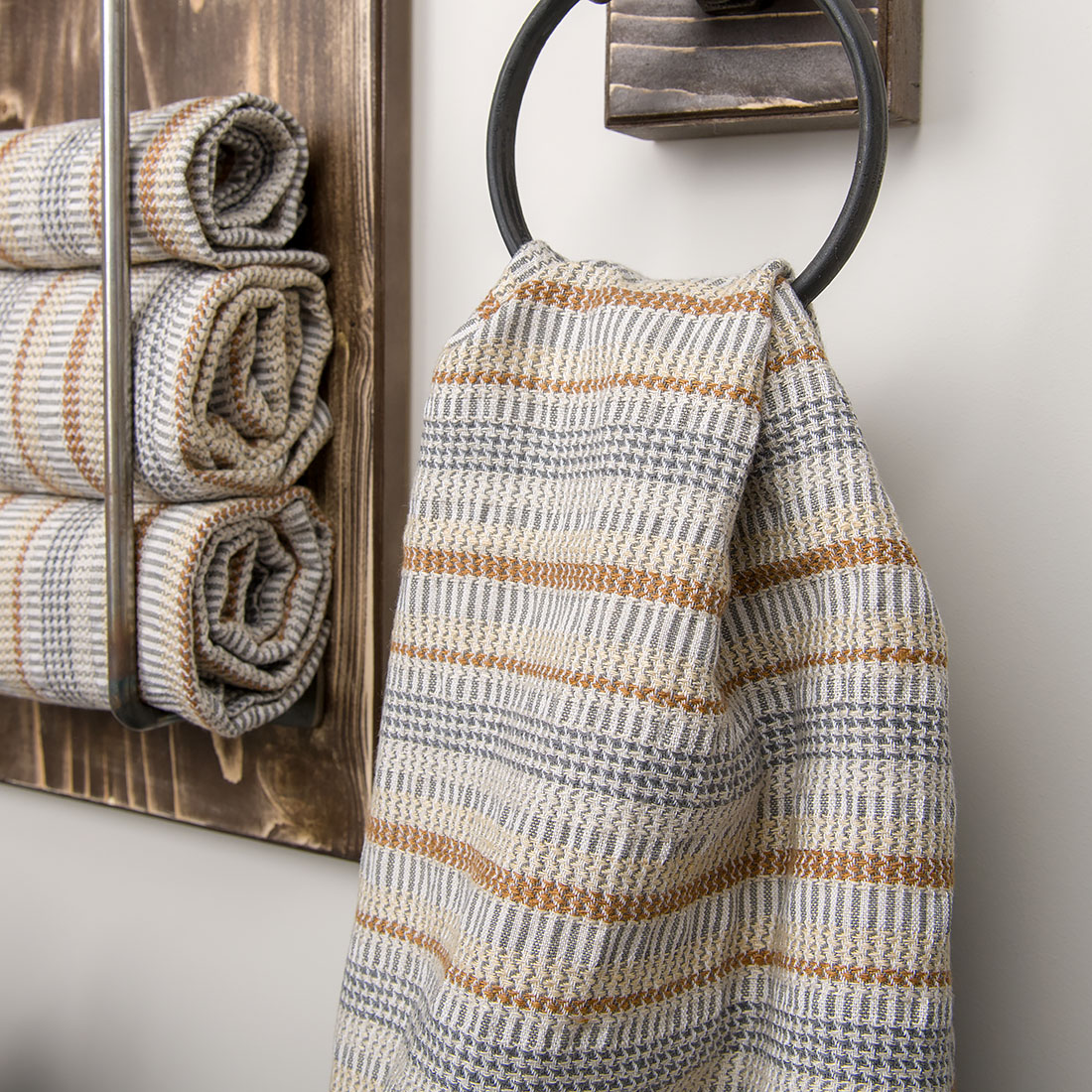
Dobby towels are the quiet workhorses of the linen world. The structure is even and consistent, which gives them balanced absorbency, reliable drying, and solid durability for everyday use.
They’re the kind of towels you don’t really think about, they just work. From daily showers to regular hand use, dobby towels fit easily into routine life, making them a dependable choice when you want something practical, long-lasting, and uncomplicated.
Classic waffle weave
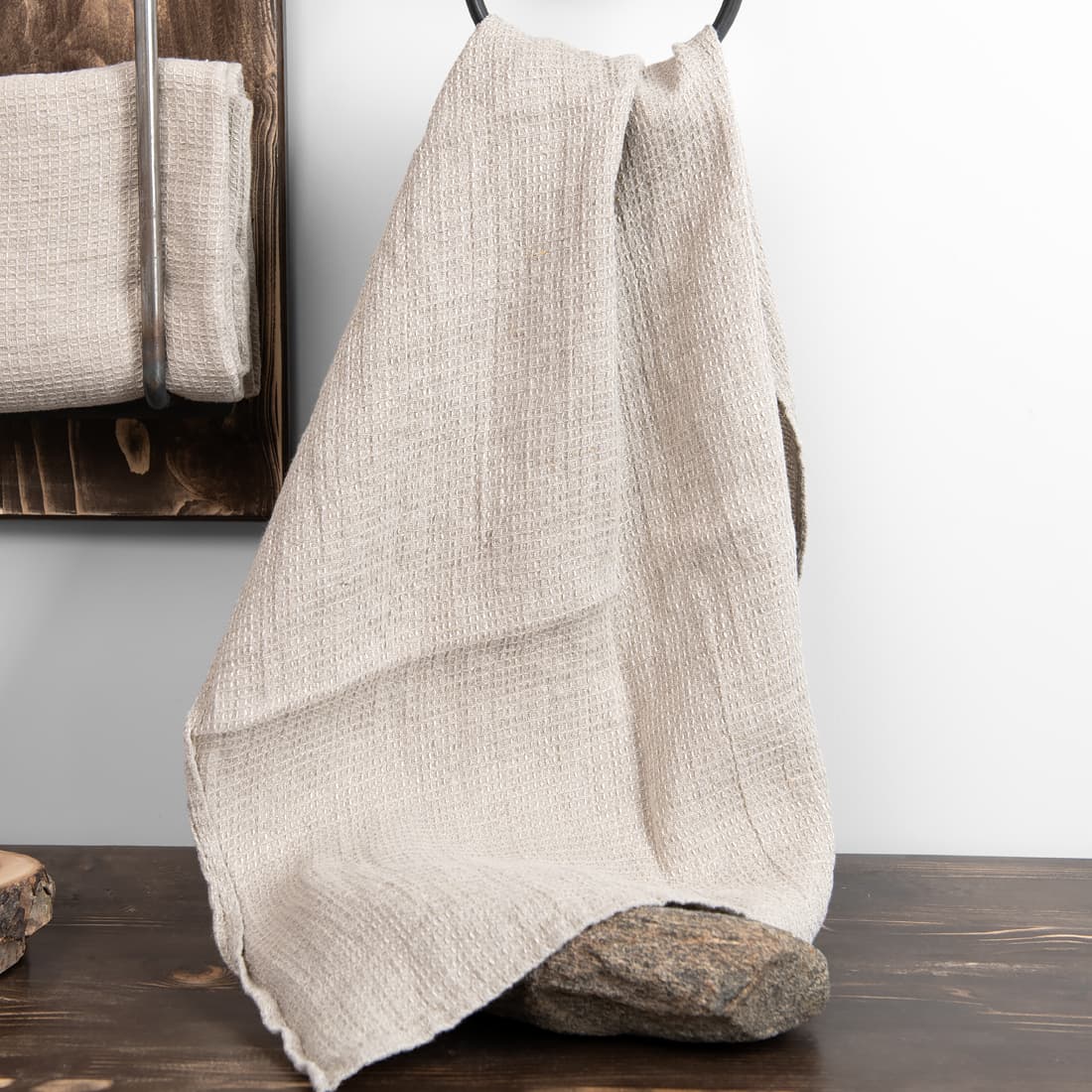
Classic waffle towels are thinner and lighter, with a flatter waffle structure that prioritizes airflow and speed. They dry very quickly, feel breathable in daily use, and take up minimal space, which makes them especially practical for everyday routines, smaller bathrooms, or travel.
Because of their lighter build, classic waffle towels feel efficient and uncomplicated, a good choice when fast drying, easy handling, and compactness matter most.
Larger waffle weave
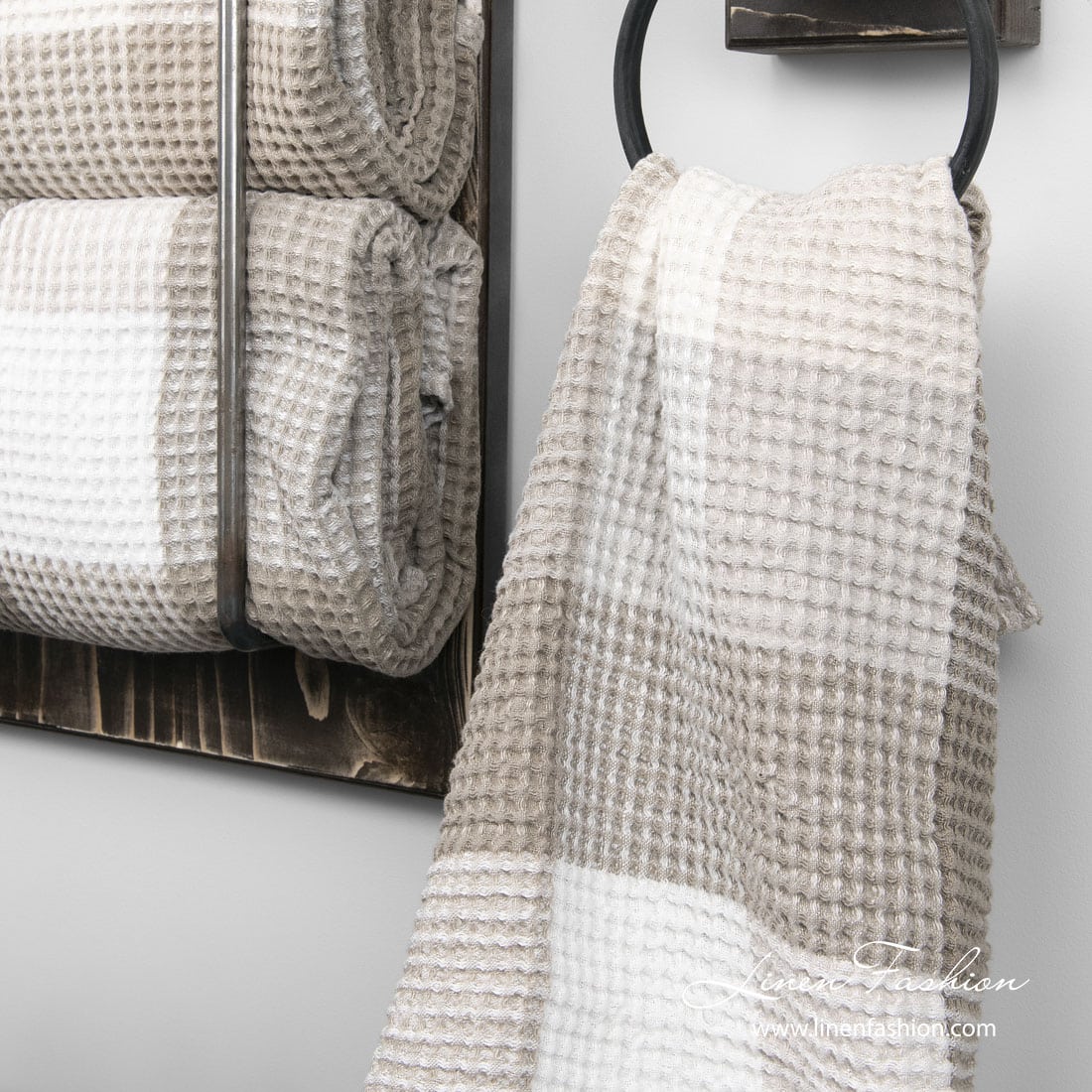
Larger waffle towels build on the same airflow-driven structure, but with more volume and cushioning. The deeper waffle pockets make the towel feel thicker, fluffier, and more substantial, while still absorbing moisture extremely well and drying faster than most alternatives.
Speaking from experience, this is the waffle towel people tend to fall for. It balances comfort and performance in a way that feels genuinely satisfying. It’s practical enough for everyday use, yet premium quality to feel like an upgrade.
Twill weave
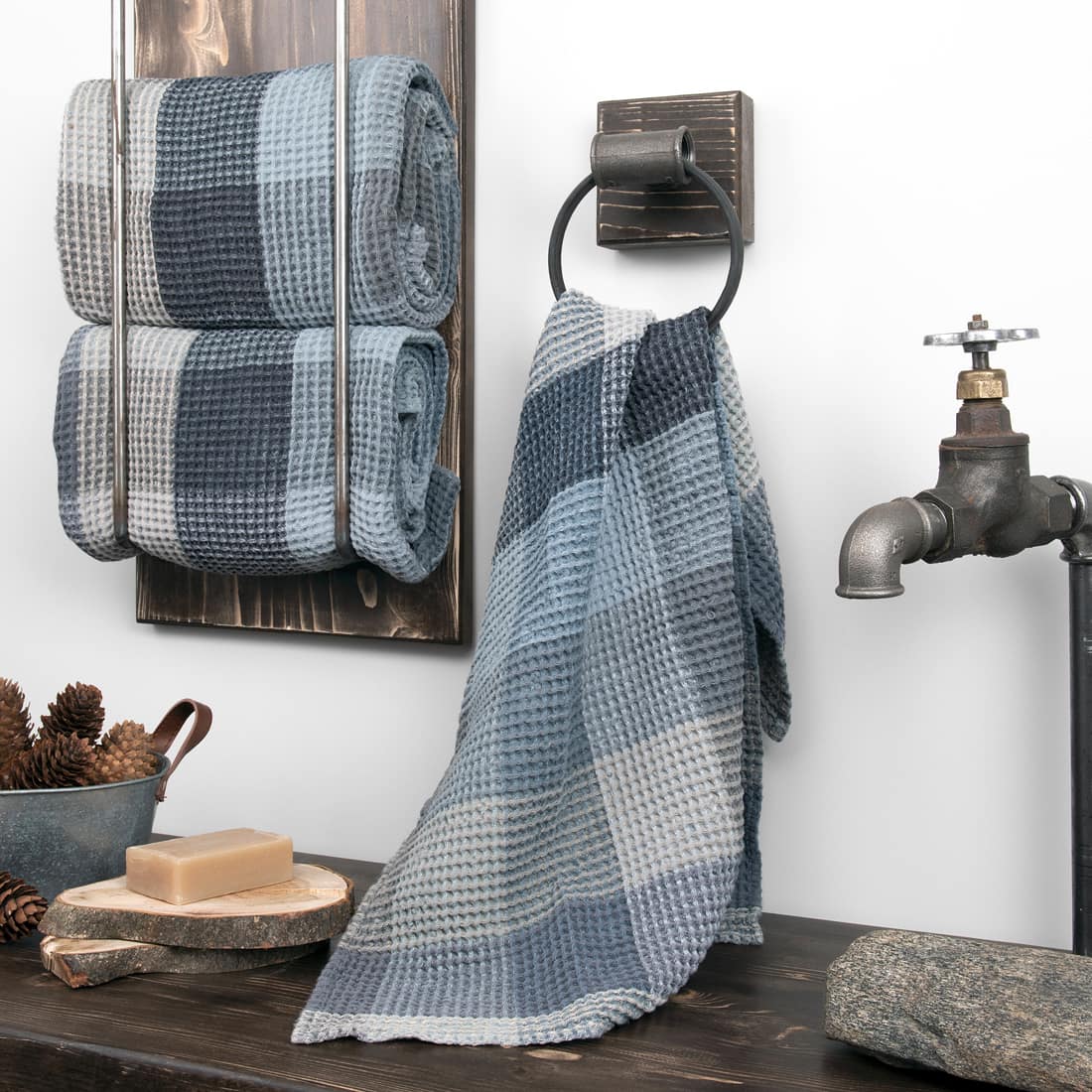
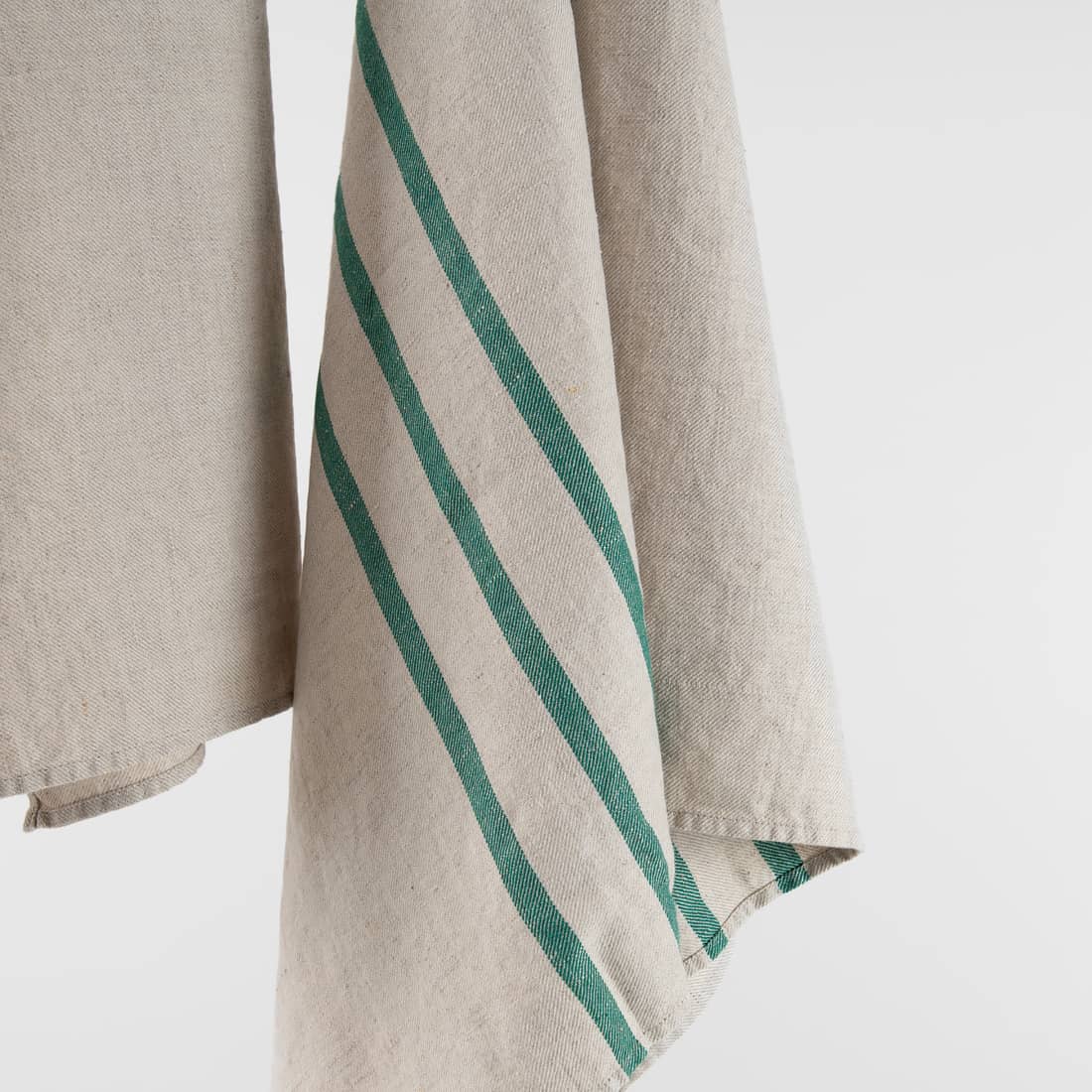
Twill towels feel smoother and slightly more structured right from the start. The diagonal weave creates a denser drape and a refined, more uniform surface that feels comfortable against the skin and looks calm and elegant in the bathroom.
They don’t dry as quickly as waffle towels, but they still release moisture efficiently and tend to outperform most cotton towels over time. Twill weave towels are often chosen for comfort and appearance as much as function.
About Texture, Wrinkles, and “Imperfect” Linen
Wrinkles in linen towels aren’t defects. They’re a sign that the fabric hasn’t been overly processed to look perfect.
Natural texture usually means better airflow, flexibility, and a more honest material. Linen doesn’t try to hide what it is, and that’s part of its appeal.
How Linen Towels Change With Use
Linen towels have a natural settling-in phase, but they’re designed to work well from the very first use. They may feel slightly more structured at the beginning (that’s a sign of a well-made fabric) yet they already absorb moisture efficiently and dry quickly.
With regular washing and everyday use, the fibers settle in, as if they’ve found their new home and finally stopped being stressed. The towel softens noticeably, comfort improves, and everything starts to feel more natural.
Unlike cotton towels, linen doesn’t rely on surface loops that gradually wear down. Instead of losing performance, it ages differently, often more gracefully, keeping its shape, comfort, and function while quietly getting better to live with.
Why Some People Decide Linen “Doesn’t Work”
Most disappointment with linen towels comes down to expectations.
People often judge them too early, expect cotton-like softness immediately, or choose based on appearance instead of weave. Thickness can also be misleading, since heavier doesn’t always mean better.
When linen towels are judged by drying speed, freshness, and long-term comfort, the picture changes.
Matching a Linen Towel to Your Life
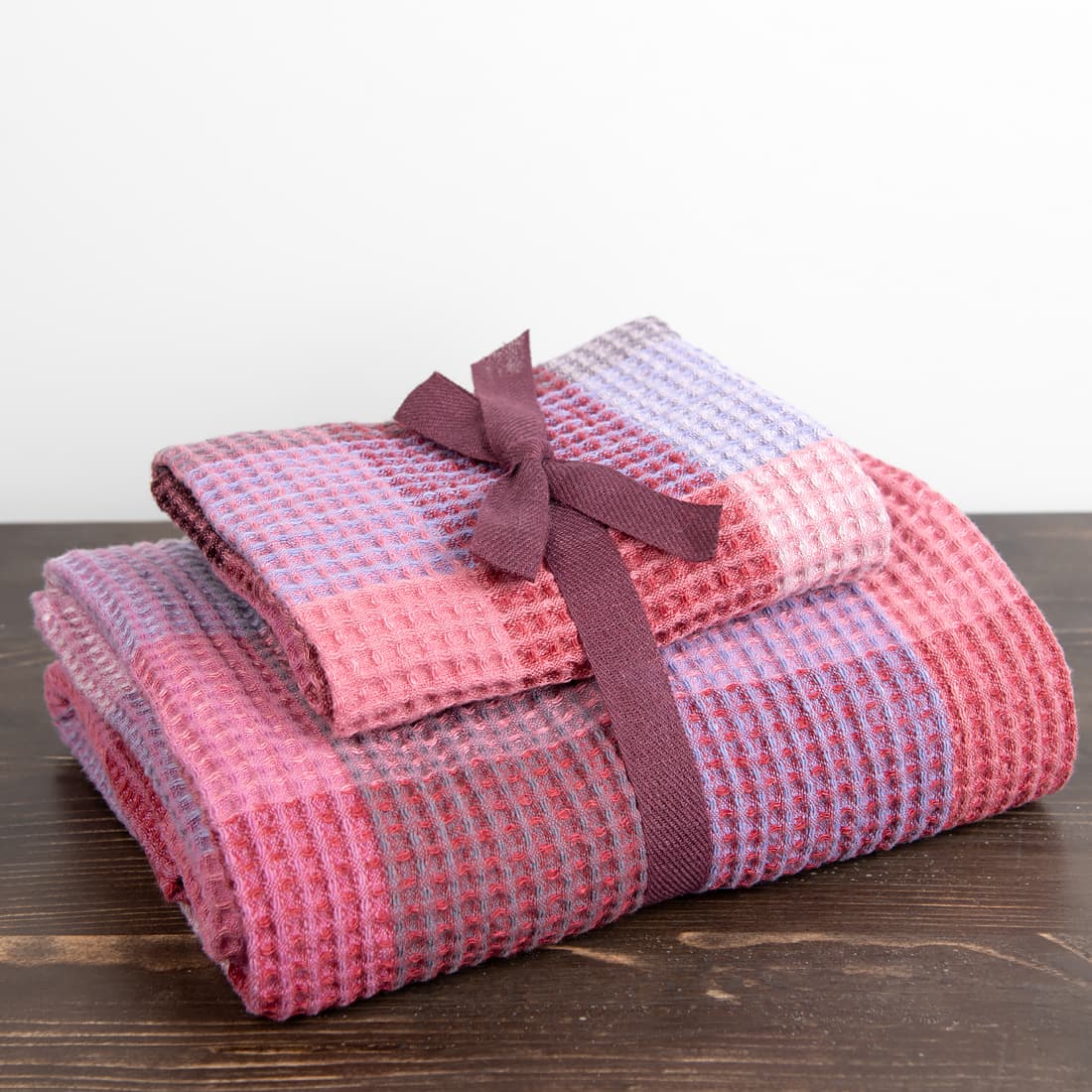
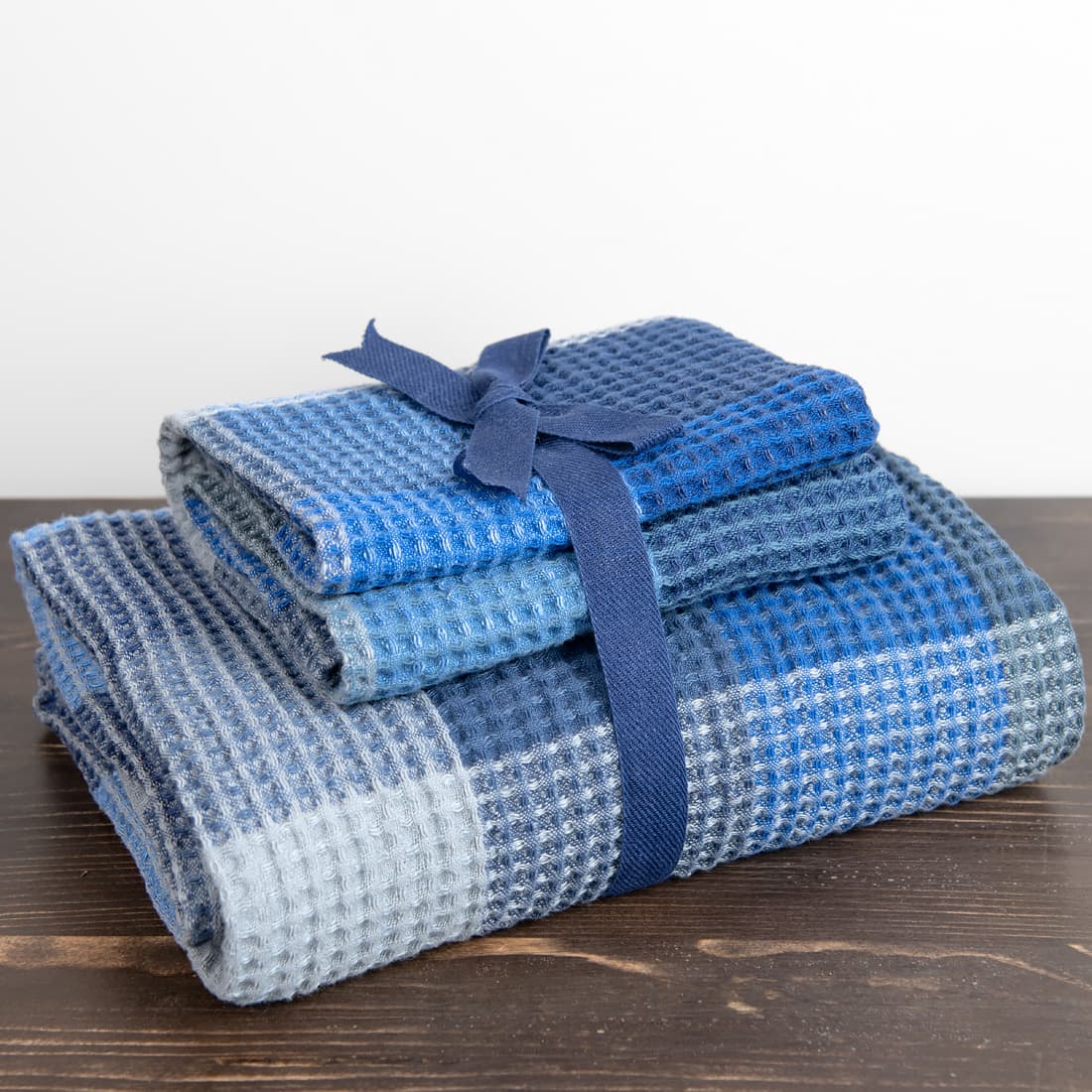
If towels are used daily, bathrooms stay humid, or fast drying matters, waffle or dobby weaves tend to work best.
If you care more about texture, structure, and how the towel feels once it has softened, twill weave is often a better choice.
There isn’t a single “best” linen towel, only the one that fits how you live.
Common Questions About Linen Towels
Are linen towels absorbent?
Absolutely yes — linen towels are highly absorbent. They take in moisture quickly and effectively, then release it just as efficiently. This means the towel dries you thoroughly without staying damp, helping it feel fresher between uses.
Do they feel rough?
Linen towels may feel firmer at the beginning, but unlike many towels, they actually improve with use. With regular washing, the fibers soften naturally, making the towel more comfortable over time while maintaining its durability and absorbency.
Do linen towels wrinkle?
Yes — and that’s completely normal. Those natural wrinkles are a sign of minimal processing and good airflow, not a flaw. Many people come to appreciate this relaxed, authentic texture.
Do they last longer than cotton towels?
In most cases, absolutely yes. Linen fibers are naturally strong and wear-resistant, which helps linen towels maintain their shape, absorbency, and comfort over a longer period of everyday use.
One Last Thought
If there’s one thing worth remembering, it’s this: linen towels aren’t about first impressions. They’re about what happens after the honeymoon phase, when comfort feels natural, familiarity feels reassuring, and trust no longer needs to be questioned.
That’s when drying speed, freshness, and everyday comfort start to matter. Choose based on weave and size, not thickness, and let the towel earn its place in your routine.
Writer’s note: this is exactly how it happened with our colleagues and friends, consider this a friendly warning.